
Remembering Joe Elder (1930-2025): The Teaching and Study of India and South Asia in the United States
John E. Cort
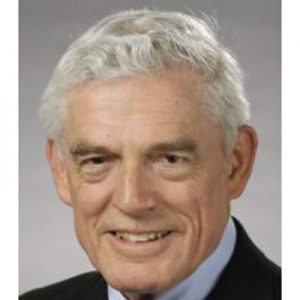
Joseph W. Elder (known to all simply as Joe) died in Madison, Wisconsin, on January 26, 2025, at the age of ninety-four. He played a central role in the development and growth of the study and teaching of India and South Asia in the 1960s, ‘70s and ‘80s. Through his institutional involvements, his promoting of undergraduate and graduate study programs and training, and his development of textual and visual pedagogical materials, he helped establish the field of South Asian Studies as a vital component of U.S. higher education. Over subsequent decades he continued to play a leading role in organizations that provide key support to Indian and South Asian Studies, including as President of AIIS from 1986 to 1994 and then Chair of the Board of Trustees from 1994 until 2002. The reminiscences below do not attempt to provide a complete overview of Joe’s life and career—that would require a full biography. Instead, they focus on his contributions to the American understanding of South Asia and India; but because Joe was involved in seemingly every facet of the development of American studies of India and South Asia from the 1960s through the 2000s, these reminiscences of necessity are also a mini history of the growth of the field.
EDUCATION AND FIRST TRIPS TO INDIA
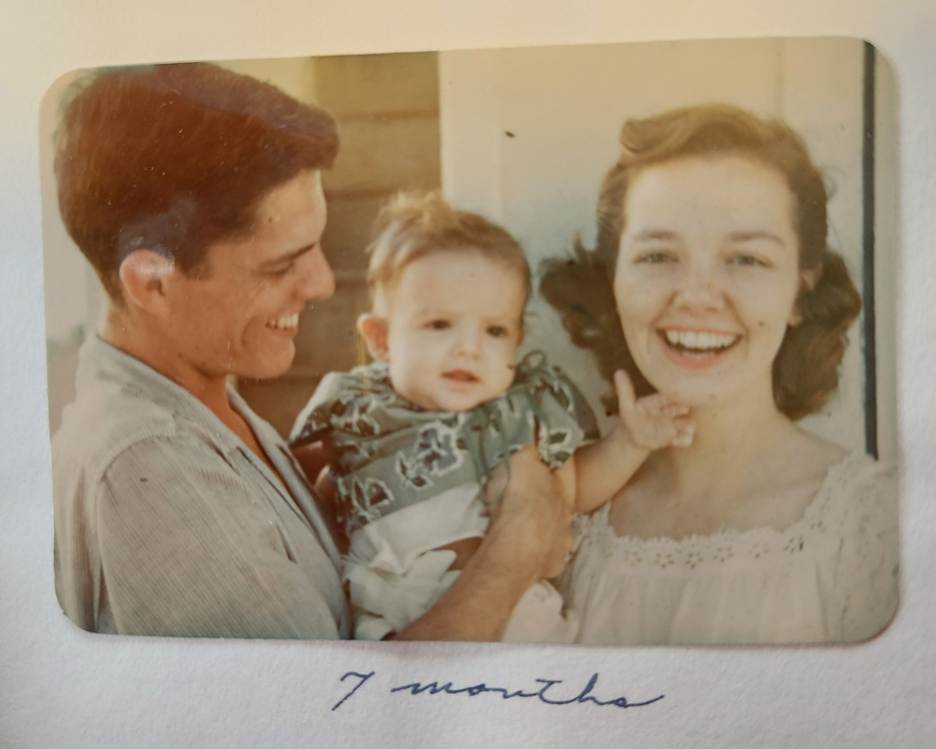
Joe was born on July 25, 1930, in Kermanshah in western Iran (then known as Persia). He was the fourth of six children born to Rev. (later Dr.) John Elder and Ruth Roche Elder, who were Presbyterian missionaries. John Elder (1894-1983) served in Iran for 42 years, as both a physician and a pastor to Persian-speaking congregations. Joe was initially home-schooled by his mother, and then attended the Presbyterian Mission’s Community School in Tehran until the age of fifteen, and graduated from high school in Mount Hermon, Massachusetts, in 1947. From there he went to Oberlin College, graduating in 1951 with a B.A. in Sociology. It was at Oberlin that he met his wife Joann (known as Jo; 1929-2022); they were married in 1951.
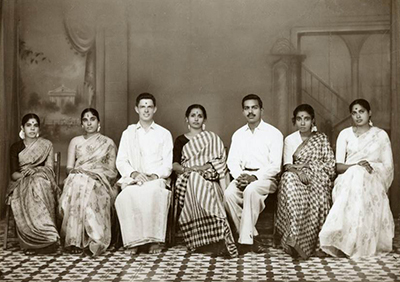
After graduating from Oberlin, Joe and Jo spent two years teaching English in Madurai, South India, as representatives of the Oberlin Shansi Memorial Association. This organization was founded in 1908, and from 1918 regularly sent Oberlin students and alumni to teach at a school in Taigu in Shanxi Province in China. Joe and Jo at first thought they would go to China; but the combination of the victory of the Chinese Communist Party in the civil war in 1949, and the outbreak of the Korean War in 1951, meant that the school in China was closed down. The Shansi program had to pivot, and in 1951 the program sent Joe and Jo to Madurai. In addition to teaching English at the high school level, they established connections between Shansi and two colleges of Madurai University. The American College is a men’s college, established in the nineteenth century, and Lady Doak College is a women’s college founded in Madurai in 1948. Joe is credited with laying the foundation for an ongoing relationship between those two colleges and Oberlin College, which was formally established in 1958 and continues today.
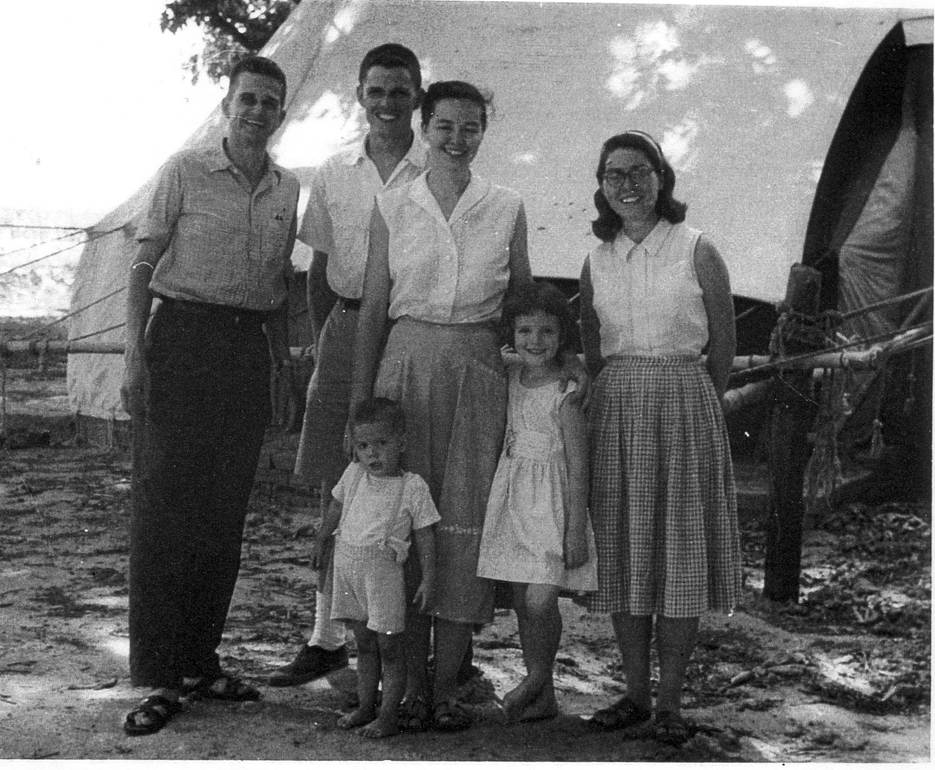
As part of their service on the Shansi program, Joe and Jo returned to Oberlin in 1953 for graduate study. They both finished M.A. degrees in Sociology. Joe’s 1954 M.A. thesis, “Caste in the Churches of South India in Madurai,” was based on research he had been able to conduct along with his teaching. He showed that despite the anti-caste ideology of churches in South India, in practice caste distinctions were very much alive in the churches. Jo finished her M.A. thesis in 1955, with the title “Family Patterns and Adolescent Girls in South India and the United States.”[1] From Oberlin Joe proceeded to Harvard, where he continued his study of Sociology. As he described it, the Sociology Department at Harvard in the 1950s was “very exciting.” His advisor was Talcott Parsons (1902-1979); also on his dissertation committee were Cora Du Bois (1903-1991) and Robert Bellah (1927-2013). He spent two years, 1956-58, conducting fieldwork research in India on the impact of industrialization on Hinduism. The Elders and their two children lived those two years in a tent in a mango grove adjoining a small village in North India near Moradabad, where a large sugar factory had recently been set up. The Elders were able to use the land in part because the villagers believed the grove was haunted, and were glad to let Joe and Jo use it. His 1959 Ph.D. dissertation was entitled “Industrialism in Hindu Society: A Case Study in Social Change.” Joe had started his doctoral fieldwork with the thesis that industrialism and Hinduism were in many ways incompatible, and that the people in the village he studied would find it difficult to adapt to the changes in lifestyle and rationalized work patterns that came with the introduction of a large factory to the village. He quickly found the opposite to be true, as Hindu practices were integrated very smoothly into the lives of the factory and its workers. He related that when they first arrived to live in the village they were told that they had to have a puja performed before they could move into their tents. The priest who performed the puja, it turned out, was the priest for the sugar factory. Clearly village Hinduism and an industrial factory were not as incompatible as Joe had hypothesized. He frequently mentioned this as an important lesson for all researchers, who need to be ready to acknowledge that their original research hypotheses do not bear out, and then to analyze what the conclusions from the data actually are. The central themes of his graduate research—caste, Hinduism, industrialization—continued to engage him for the rest of his career.
THE UNIVERSITY OF WISCONSIN AND THE GROWTH OF UNDERGRADUATE CURRICULUM ON SOUTH ASIA
After receiving his Ph.D. Joe returned to Oberlin where he taught Sociology for two years, from 1959 to 1961. He might have remained at Oberlin were it not for developments in the field of Indian Studies (as it was then often known) in the United States. In the early 1950s, during the early years of the Cold War, the Ford Foundation determined that while American universities were good at training people to have an expertise in European and American studies, there was a dearth of people trained to study other parts of the world. In response the Foundation established the Foreign Area Training Fellowships program to train people to gain an expertise in area studies. Joe was in the first cohort of fellows, and the Ford Foundation funded his graduate studies in Sociology at Harvard University. Also in response to the Cold War, in 1958 the U.S. Congress passed the National Defense Education Act (NDEA), which provided funding to American universities to teach languages that otherwise were not being offered, including languages of South Asia. At Madison, faculty members with a mutual interest in India established the Department of Indian Studies, also in 1958. It was a broadly interdisciplinary department, with faculty expertise in classical and modern languages, literature, political science, history and anthropology. The new program received a NDEA grant in 1960, which allowed for the creation of the South Asia Language and Area Center (now the Center for South Asia) at Madison. This was followed by a five-year Ford Foundation grant from 1962 to 1967. These two funding sources allowed the department to hire additional faculty members. In 1961 the political scientist Henry Hart (1917-2014), who was chair of the new department, offered Joe a joint appointment in the Departments of Sociology and Indian Studies. (The Department of Indian Studies became the Department of South Asian Studies in 1973. In 1999 South Asian Studies was folded into what is now the Department of Asian Languages and Cultures.) Joe often joked that he was the only American sociologist who had lived in a tent in an Indian village for two years, and so he had little competition for the position.[2]
The Wisconsin College Year in India Program
Part of Henry Hart’s vision for the development of Indian Studies in the U.S. was the need for an undergraduate study program in India. This would provide an important pipeline of students to attend more specialized Indian Studies graduate programs and eventually enter the ranks of college and university faculty. Some U.S. colleges and universities had year-long study programs—usually in the junior year, and hence called simply “junior year abroad”—in Europe, but there were no regular opportunities available for undergraduate students to study in India. In 1960 as a trial run Hart arranged for Thomas Trautmann, a junior at nearby Beloit College, to spend a year as a “casual student” at the University of Delhi. The following year Hart arranged for five students, all of whom had recently graduated from college or university in Wisconsin (Beloit College, Lawrence University, and University of Wisconsin) to spend the 1961-62 year as casual students at the Delhi School of Social Work. They studied Hindi and Urdu, and conducted fieldwork projects. In spring of 1962 Hart sent Joe, who had only recently joined the Wisconsin faculty, to India to find out how the experience was working, and then further turned over direction of the nascent program to him.
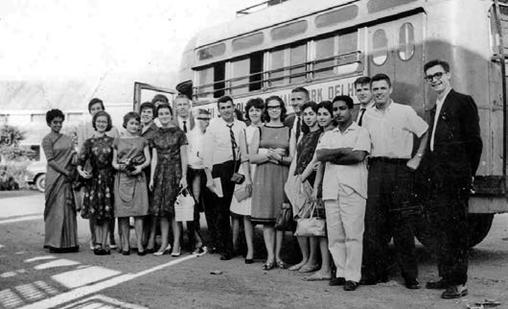
Thus was born the College Year in India Program (CYIP), with which Joe was associated for five decades. During the summer of 1962 sixteen students from the University of Wisconsin and schools in the Associated Colleges of the Midwest came to Madison to study Hindi, and then went for the year to three campuses in India: the School of Social Work at Delhi University, Jamia Millia Islamia in New Delhi, and Banaras Hindu University in Banaras (now Varanasi). This first year established the three defining features of the CYIP. The first was to spend the summer before the program in intensive language training. The summer program also involved an increasing emphasis on cultural orientation to prepare the students better for what for many could be a very challenging year. The second was to continue the language training during the year in India, so that at the end of participation in CYIP a student had at least a passing ability to speak an Indian language. The third feature was for each student to pursue a year-long research project, usually resulting in a lengthy written paper that was in many aspects just like an undergraduate honors thesis. The research project addressed the difficulty of fitting the American students into ongoing classes in the Indian universities, where classes tended to focus largely on training students to pass exams at the end of the term. From the 1963-64 academic-year program participation was opened to any undergraduate student in a U.S. or Canadian college or university. In its independent structure the CYIP as developed by Joe was quite different from the normal college year abroad program. But it was precisely that innovative structure, which called upon students to be self-motivated and take ownership of their education, that helped make it a success. Joe sent a letter to all students admitted into the program that laid this out clearly, when he wrote, “Welcome to one of the toughest, most frustrating years you will have ever experienced. Welcome, also, I hope, to one of the richest, most meaningful years of your lives.”
The program ran under Wisconsin supervision until 2015. The locations of the program in India changed over the years; in addition to Delhi and Banaras, at one time or another there were campuses in Hyderabad, Waltair (a section of Visakhapatnam), Madurai and Agra. Spinoff programs sponsored by the University of Wisconsin were in Nepal and Kerala. During those years more than 1,000 students went to India. CYIP alums quickly were found in AIIS language programs, in graduate programs in a wide range of disciplines, receiving AIIS junior fellowships for dissertation research in India, and finally in teaching positions in dozens of colleges and universities. Many were also AIIS trustees and officers over the years. In their conclusion to a history of CYIP, Joe and Joan Raducha (a CYIP alumna, who for many years was the Associate Dean of International Studies at the University of Wisconsin) wrote, “One of the stated goals of the program was to create a pool of experts who would focus their careers on India and South Asia.” While many of these experts were in academia, even more pursued other careers that were shaped by their experience in India, in fields such as museum curation, documentary filmmaking, public health, global development, public education, the American nonprofit sector, and government service.[3]
Undergraduate Curriculum
One of the major tasks of the new Department of Indian Studies at Wisconsin was to prepare educational materials for the teaching of India at American colleges and universities. The connections between this and the CYIP are obvious. But the pedagogical materials were designed to serve a much broader need. There was a growing interest in teaching about India throughout the U.S.; very few people, however, were adequately trained to do so without assistance. Many teachers could incorporate materials on India into existing courses. But there was a perceived need for semester-long courses devoted solely to India. One approach was that of the interdisciplinary “civilization” course (or course sequence). Joe wrote, “The advantage of the ‘civilization’ approach is that it allows the student to explore another total way of thinking, and perhaps to acquire a deeper understanding of Indian society as a whole. This understanding, in turn, can help him gain a perspective toward his own society.”[4] The year-long two-course sequence developed at Wisconsin was based on this model. The first semester dealt with classical Indian civilization, and the second semester with modern Indian civilization. Joe taught the modern half of the course sequence for many of the fifty-three years he taught at Wisconsin.
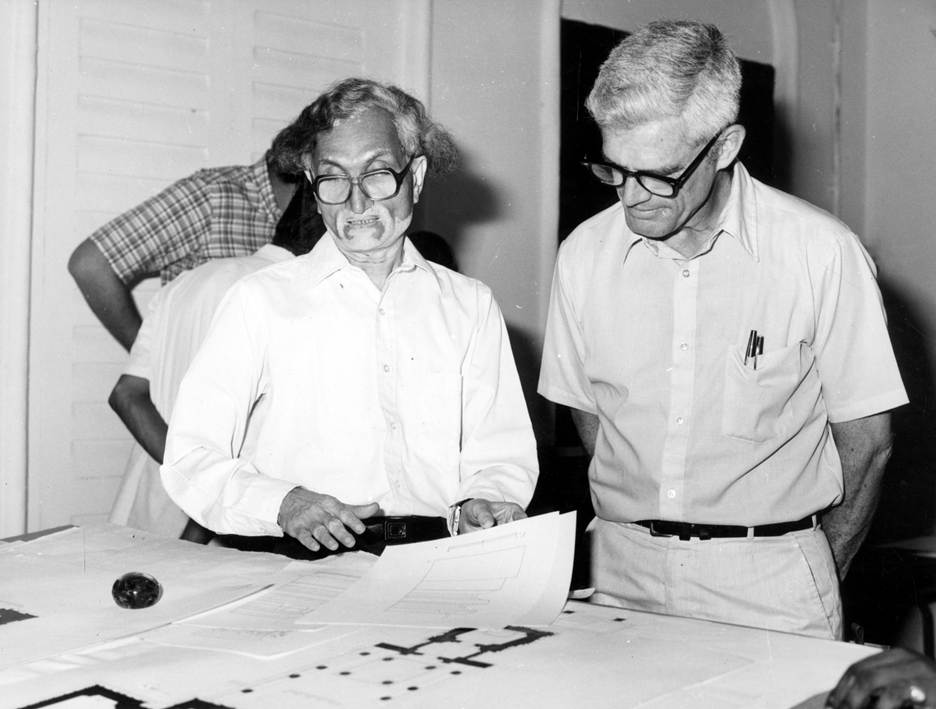
In 1964-65 the Department was approached by the Office of Education of the U.S. Department of Health, Education, and Welfare and asked to prepare a syllabus for such a course or courses on Indian civilization. The members of the department were joined by faculty members of the University of Chicago for a retreat in May 1965, and devised a list of ideal lecture topics for a one-year course of ninety-seven lectures. Joe became editor of the syllabus, assisted by two graduate students at Wisconsin, Willard L. Johnson and Christopher R. King. Twenty-five scholars prepared the detailed lectures along with syllabi of required and recommended readings. Joe himself prepared eleven lectures, on topics such as caste, village economy, village religion, village culture, India’s cities, education and Indian intellectuals. The resultant 188-page typed and spiral-bound volume was ready for distribution by the Foreign Area Materials Center of the University of the State of New York in September 1965.
While many of the articles and books in the syllabus were readily available in most U.S. college and university libraries, many were not. In response, Joe and his two assistant editors contacted publishers and journal editors to seek permission to use extracts and entire articles. They compiled a two-volume set of 751 pages that included over 150 readings. These volumes, entitled Articles and Excerpts to Accompany the Civilization of India Syllabus, were also produced as inexpensively as possible and distributed by the Foreign Area Materials Center of the University of the State of New York starting from May 1966.
The syllabus project was very successful, which led Joe and his colleagues at Madison to consider a revised edition, based in large part on suggestions from people who had used the first edition. The Syllabus was retitled Lectures in Indian Civilization, with the same set of three editors. Some lectures were combined, and new ones were added. The result was again a syllabus of ninety-seven lectures for a year-long course. The new volume also included a thirty-six-page chronology of Indian history, an expanded twenty-four-page bibliography, and a forty-five-page glossary and index. The editorial team contracted with the educational publisher Kendall/Hunt of Dubuque, Iowa, which produced an easily affordable book of 483 pages. It was published in 1970. Responses to the initial Syllabus and the accompanying set of readings revealed the need for a set of essays that were specially prepared for use with the ninety-seven lectures to fill in gaps in the readings. Again Joe gathered colleagues to think through the problem, and also took advantage of the presence in Madison in summer 1966 of participants at a four-week faculty workshop on South Asia. The result was the two-volume Chapters in Indian Civilization, edited by Joe, totaling 564 pages, and also published in an affordable format by Kendall/Hunt in 1970. Each of the authors was specifically approached for their contributions. Volume 1, on classical and medieval India, contained four essays by J.A.B. van Buitenen, Padmanabh S. Jaini, Agehananda Bharati and Richard Robinson, along with an index. The essays covered the Vedas and Upaniṣads, the Śramaṇa traditions, pilgrimage and classical Indian philosophy. Volume 2 was on British and Modern India, and consisted of eight essays by Joe (two), K.E. Eapen, Cliff R. Jones, Robert E. Brown, M.G. Krishnamurthi, William McCormack and Robert J. and Beatrice D. Miller, again with an index. Essays were on Indian intellectuals, mass media, dance and dance-drama, music, modern Indian literature, language identity, how to study “civilizations,” and the peoples of India.
Civilization of South Asia Film Project
The students who went on the College Year in India Program were able to integrate their coursework at the home college or university with the experience of living in India for a year. Most students, however, do not have the opportunity to study abroad. Another of Joe’s initiatives was designed to help bridge this gap. Early in the CYIP, several students expressed an interest in producing documentary films as their yearlong research projects. This evolved into the Civilizations of South Asia Film Project that began in 1971.
Over the next three decades twenty-five films were produced, all of which are still available on the website of the Center for South Asia at Wisconsin.[5] While some of them have understandably aged, and are of historicist interest at best, many of them have borne up remarkably well over the years and are still valuable teaching aids. In large part this is due to the careful attention Joe paid that the films be specifically designed for use in the classroom. He prepared teaching guides for many of the films, and did test runs of some of the early ones to see how students received them. In this attention to classroom use they continue to be superior to most documentary films produced in recent decades that are intended for an audience such as cable television or now the internet, but not the classroom.
THE AMERICAN INSTITUTE OF INDIAN STUDIES
The sea change in the 1960s in the American study and teaching of India and South Asia that saw the formation and growth of academic departments, undergraduate study abroad programs, and college and university curricular materials also saw the birth of the American Institute of Indian Studies.[6] As a result of meetings in New Delhi and New York City, the Institute was incorporated in October 1961, with fifteen members institutions. One of those institutions was the University of Wisconsin, and Henry Hart from Wisconsin was both a Trustee and the Institute’s first Secretary.
While Wisconsin did develop successful M.A. and Ph.D. programs in South Asian Studies, as we have seen, an emphasis there was on developing undergraduate curricula and the CYIP. Support for undergraduate education was extensively discussed in the meetings that led to the founding of AIIS, but in the end AIIS decided instead to focus on graduate training and providing research opportunities for senior scholars. In its early years, AIIS sponsored three kinds of fellowships to India: faculty research fellows, who were already South Asia specialists in teaching positions in the U.S., and spent the year in India conducting research; faculty fellows, who were non-specialists also in teaching positions in the U.S., and spent the year both on research and developing curricular materials for augmenting existing courses with Indian content or creating entirely new courses; and junior fellows, Ph.D. candidates who studied and/or conducted research in India.
The first batch of fellows was in India for the 1962-63 academic year. Joe was among them, conducting multi-site research into differences and similarities between North India and South India. This was a time when scholars in many disciplines were researching what was broadly called “tradition and change,” “structure and change,” or “tradition and modernity,” with a special focus on the nations and cultures that were emerging out of colonialism. Joe wrote that he was interested in studying attitudes on matters at the heart of sociological inquiry including “mobility aspirations, universalistic versus particularistic identities, causality consciousness, empathy, authoritarianism, caste orthodoxy, and political awareness.”[7] He was based in Lucknow, but also conducted research in and around Madurai. He created an attitudinal survey which was used by teams of researchers in both locations, in which over 2,500 respondents were asked a wide range of questions on attitudes to things such as education, caste, career, men, women, and marriage. The questions emerged from a combination of approaches: critical psychology, social psychology, anthropology and sociology. In both locations the survey was conducted in three sites: a major city, a tehsil or taluka headquarters and a village. He was able to analyze his extensive data as controlled for factors such as age, gender, caste and education. The research revealed some significant differences between attitudes in North and South India, which Joe analyzed in several articles in journals and edited volumes.[8]
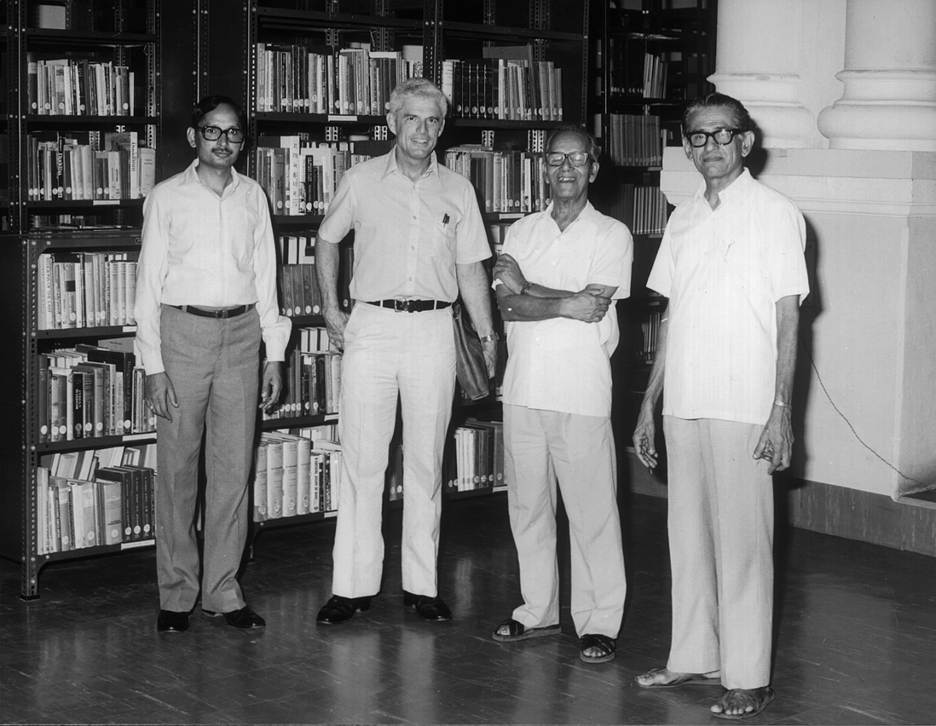
Aside from being the recipient of a research grant, Joe’s interaction with AIIS in the 1960s and 1970s was somewhat limited, as he devoted his energies to supervising CYIP. Other faculty members at Wisconsin such as Henry Hart and Robert J. Miller played more substantial roles in Institute affairs. Joe did serve on the Publications Committee in 1966-67, the Nominating Committee in 1971-73 (including being chair in 1973), and an ad hoc Committee on the Constitutional Make-up in 1979. In 1985 he was elected to serve as President from 1986 to 1990, and then re-elected for a second four-year term until 1994. This was followed by eight years, 1994 to 2002, as Chair of the Board of Directors.
During his term as President the Institute moved to computerize the operations of its Chicago office, leading to much greater efficiency, especially when the President resided elsewhere than Chicago. The late 1980s and early 1990s was a period of some uncertainty in Institute funding; Joe guided the Institute through this period, and it was on much more secure financial grounds by the end of his presidency. Joe also encouraged the AIIS in Delhi to develop the expertise to assist U.S. undergraduate study abroad programs in India. These programs all faced difficulties in obtaining student visas, hiring faculty and other staff in India, and running their Indian finances. Joe thought that the AIIS office in Delhi could be of assistance, and by 1996 AIIS was filling this role for most of the U.S. study abroad programs in India.
The Institute had long sought to have a headquarters building of its own in Delhi, rather than relying on renting buildings in the ever more expensive Delhi real estate market. In 1992, with the help of the Ministry of Education of the Government of India, the Institute was allotted half-an-acre of land in Gurgaon (now Gurugram) by the Haryana Urban Development Authority. On January 20, 1994, the Institute held the Foundation Stone Laying Ceremony for its new headquarters building. The building was completed and inaugurated in February 1998. In addition to the Institute’s management, the Gurgaon building is home to the Center for Art and Archaeology, which was moved from Ramnagar (across the river from Banaras), and the Archives and Research Centers for Ethnomusicology, which was relocated from rented facilities in New Delhi. There were some reservations about locating all these essential activities of the Institute in an area that at the time was considered to be far outside the center of New Delhi; but with the vast expansion of both the National Capital Region and the Delhi Metro, the location has presciently turned out to be highly accessible.
A fourth development during Joe’s tenure as AIIS President was the reorganization of the language programs. The need for the teaching of modern South Asian languages had been recognized by several organizations in the U.S. soon after World War II. This received heightened attention with the passage of the National Defense Education Act in 1958. Offering advanced language instruction was part of the initial proposal for establishing AIIS. Individualized instruction was offered in Poona (now Pune) starting in 1963, and in 1964 Debi Prasanna Pattanayak was appointed Chief Linguist and charged with setting up regularized advanced language training. The Institute established its Language Committee in 1965 to oversee language instruction. The Language Program began to receive funding from the U.S. Office of Education in 1969. When Joe started his term as President, the Language Program primarily consisted of Hindi, and was receiving poor reviews from the U.S. Department of Education. Based on his experience with CYIP’s language instruction, Joe moved to improve the Language Program. He moved Hindi instruction to Banaras so the students could live in a Hindi-speaking city. (It subsequently moved to Udaipur and is now in Jaipur.) He reorganized the smaller Tamil program. Finally, he charged the Language Committee, under the leadership of its chair, Rosanne Rocher of the University of Pennsylvania, to professionalize the teaching of Indian languages in accordance with best practices in language pedagogy. During this period the Language Committee began to address the problem of how to offer regular instruction in lesser-taught languages, i.e., those other than Hindi and Tamil, the languages studied by the majority of language students. In the subsequent nearly four decades the AIIS Language Program has grown to be the largest of AIIS’s activities in terms of numbers of students in India, and has proven to be a steady source of scholars who go on for advanced degrees in the study of South Asia. It is widely recognized for the world-class quality of language instruction.
In 1998, four years after Joe’s term as President ended, he and two other former presidents of AIIS, Ainslee T. Embree of Columbia and Edward C. Dimock, Jr., of Chicago, edited a volume to celebrate fifty years of India’s independence, entitled India’s World and U.S. Scholars, 1947-1997. In addition to an abbreviated version of Maureen L.P. Patterson’s history of AIIS, the volume included twenty-six essays on subjects from Anthropology to Women’s Studies. The authors of the essays were invited to consider the ways in which the study of India and South Asia had led to scholars rethinking some of the basic critical terms in their disciplines. The three editors wrote:
The main purpose of this volume is to identify ways in which, during the past fifty years, scholars, by working with data and systems of conceptualization and articulation in India, have been led to reconsider western-based theories, classification schemes, disciplines and methodologies for organizing knowledge. This volume is not intended to be a review of what scholars have learned about India during the past fifty years (although that is not entirely ruled out). This volume IS intended to be an analysis of how, during the past fifty years, scholarship throughout the world has been affected by interchange with India.[9]
INTERNATIONAL PEACE MEDIATION AND CONCILIATION
To get a fuller picture of Joe it is important to include one more way in which he had a significant impact, not just in South Asia, but in Asia more broadly. Joe and Joann both became Quakers in the 1950s during the Korean War, when he decided that he could not in good conscience participate in war and killing. He and Joann formally joined the Society of Friends (Quakers) in 1960. They were active both in the local Madison Monthly Meeting and in the work of the American Friends Service Committee, the Quaker-based organization that since 1917 has been working for a more just and peaceful world.
In August and September 1965, India and Pakistan fought a bloody war in which thousands of soldiers and civilians were killed. The two sides agreed to a ceasefire in late September, but at first there were no peace talks, and so the possibility of a resumption of warfare was quite high. The Soviet Union hosted talks between the leaders of the two countries in the city of Tashkent in Soviet Uzbekistan, and on January 10, 1966, the Tashkent Declaration was signed between the leaders of the two warring nations. However, the agreement was criticized by many leading people on both sides; and the Indian Prime Minister, Lal Bahadur Shastri, died of a heart attack in Tashkent on January 11. In the fall of 1965 some British Quakers decided that they could play a role mediating between the two sides, modelling their plan on the role that British Quakers had played during the Indian independence movement when they regularly carried messages between the British Viceroy and the imprisoned Mahatma Gandhi. The British decided that having an American Quaker as part of the team would be helpful, and Joe was asked to join it. The three-person team spent several weeks in the region in January 1966, carrying messages between the leaders of the two countries, who otherwise had no direct means of communication.
In subsequent years Joe was asked to participate in three similar international mediation and conciliation missions. In 1969 he travelled twice to Hanoi in North Vietnam on behalf of the American Friends Service Committee (AFSC). He assessed the medical needs of the North Vietnamese people, and delivered medical supplies needed for open-heart surgery specifically for civilians, since that was the only treatment for the rheumatic fever that was endemic in North Vietnam. He carried letters to and from U.S. prisoners of war being held in North Vietnam. He also conveyed messages from the North Vietnamese government to the U.S. government. In 1984-85 he was part of a two-person mission sponsored by the London-based Quaker Peace and Social Witness that made several trips to Sri Lanka to see if they could play the role of message carriers between the two sides in the civil war. These were one of several factors that led to a led to a formal mediation conference hosted by the Indian government in Thimbu, Bhutan, in July and August of 1985. Unfortunately, the peace talks collapsed in August. The Quaker team continued to carry messages between the two warring parties until 1996. In 1989 Joe participated in a fourth peace and conciliation mission. At a time of heightened tensions between North Korea on the one side and South Korea and the United States on the other, he was part of a two-person American Quaker team, again sponsored by AFSC, that visited Pyongyang to speak with leaders of North Korea. The team then carried messages to the governments in both Seoul and Washington, expressing how and why the North Koreans felt increasingly threatened by messages and military maneuvers conducted by the U.S. and South Korea.
In part the Quaker mediation efforts were successful because of two conditions imposed by the Quakers. One was that the role of the Quakers would not be made public and they would be guaranteed absolute confidentiality. As part of this condition, the Quaker messengers conveyed only spoken messages, not written ones. In relation to the confidentiality, the Quaker missions never articulated their own position on how to end the conflict, lest a proposal be misconstrued as partisan. The Quaker messengers tried simply to convey each side’s position to the other as accurately as possible, an approach Quakers call “balanced partiality.” The second condition was that the Quakers would withdraw from its work if either side felt that they no longer played a useful role.
Joe described the Quaker approach to mediation as follows:
We have no power. We could easily be dismissed as do-gooders who should be back home minding our own business. The fact that we are taken as seriously… is a never-ending miracle, which I have only been able to explain in the context of our being able to provide a service which apparently is often not available through any other channel. So to this extent we have the power of the powerless, of doing something which they [leaders of parties in conflict] can’t do and they have no vehicle for doing.[10]
SOME PERSONAL REFLECTIONS
The above summary of some of the threads in Joe Elder’s career may give some idea of his importance to the study and teaching of India and South Asia in the U.S., but it nonetheless leaves out many other threads, and fails to do justice to his presence as a remarkable person. Let me conclude this reminiscence, therefore, with a few personal comments, mostly from friends and colleagues who have been in touch in the days since we heard of his death.[11]
One friend wrote, “He had the ability to make each person think they had a special relationship with him. And now we realize how that was true, but not unique to us; he created that sense of being special with so many!” This certainly epitomizes my connection with him. I arrived in Madison in January 1973 as a transfer student to study in what was then the Department of Indian Studies. A cornerstone of the major was the opportunity to spend a year in India on the CYIP, on which I was a student in 1973-74. During the summer of 1973, in addition to studying Hindi language and participating in the intensive program orientation, I had several meetings with Joe in his office, ruminating on India, my future, the state of the world (the Vietnam War was still going on), and much else. He always seemed to have time for such discussions, and provided a model for how to interact with students that I tried to emulate in my own college teaching career. I was not the only person to experience Joe’s generosity in his office hours. A friend wrote that despite all that he did with AIIS, the Wisconsin South Asia Program, and international mediation, he “still somehow had time for the day-to-day generosity of his mentorship. I recall coming by his office and seeing the hall filled with students with whom he would meet in office hours holding what was more like an open house (with ‘bus-station chai’)”.
Spending a year in Banaras laid the foundation for my commitment to the study and understanding of India as a life goal. The year-long fieldwork project confirmed that my interests lay largely in contemporary South Asia, and that fieldwork was going to be an essential element in my research. After several years out of school, I was fortunate to be able to return to Banaras for two years, 1979-1981, as graduate student monitor for the CYIP, a position I shared with my wife Cynthia, who had also been a student on CYIP in Banaras in 1973-74. This re-confirmed my commitment to the academic study of South Asia, and introduced me to the joys (and frustrations) of teaching and mentoring undergraduate students. I view myself as fortunate that Joe enabled those opportunities, and helped shape my career trajectory. At the same time, as my friend wrote, there have been hundreds of students and scholars over the years who have had similar encounters with him. Another friend wrote, “I know that my own studies and career would have been less grounded and far less fun without his presence. But I think that is true for so many, as each person had a special relationship with him because he was committed to living that way.”
Joan Raducha was a student on CYIP, then for three years was graduate student monitor of the Banaras campus, and after doing a Ph.D. in South Asian Studies went on eventually to become Associate Dean of International Studies at UW-Madison. In the history of CYIP that she co-wrote with Joe, she said, “None of this would have happened had it not been for Joe Elder. Joe was the academic director of the CYIP program, and its heart and soul. He cared for each student who participated in the program and strove year after year to improve it. . . . He visited the program regularly; wrote grant proposals annually to support the program; organized a budget; hired overseas staff; recruited and interviewed each applicant; advised each and every student on their fieldwork projects and tutorials subjects; and provided academic direction and inspiration to the one thousand plus students who would participate in the program over time. On a regular basis, he would be involved in trouble-shooting students’ personal, cultural adjustment, and academic problems, as well as the personnel, administrative, and governmental issues that arose. He called these issues ‘puzzles to be solved.’”
Throughout all of Joe’s scholarly activities ran the interwoven threads of respect and humility. One friend wrote, “I am very grateful to have had a few interactions with Joe. I learned so much from him in those few meetings. I think the most important thing I learned from him came from his way of speaking about the people I was about to meet and learn from. He took everyone seriously and treated them with kindness but in a way that included a good bit of humor, especially about himself.” Another friend commented on the way the theme of respect was evident in the summer orientation program for students about to embark on a year in India: “No one I’ve encountered ever explained better what this meeting of America and India via us was all about. He said we should consider ourselves ambassadors from America and conduct ourselves accordingly. It is only because, over the years, I watched so many American scholars and students in India act strangely that I realized how important what Joe taught us was.”
Two people with long connections to AIIS recall first meeting Joe early in their careers, and how he remained a towering presence in the field. Ralph Nicholas of the University of Chicago wrote, “Joe Elder’s death came as a shock to many of us because we had begun to think he was immortal. For those of us in South Asian studies, he was a presence when we were starting out. For the even larger number of people who knew him as a Quaker peace activist, the fact that he had survived numerous occasions—from Sri Lanka to Hanoi—when he had ventured into the middle of raging conflicts, the evidence was clear. Now we all find ourselves at a loss, unable to imagine our fields, scholarly or activist, without his serene presence.” Frank Conlon of the University of Washington said something similar: “I first met him in 1962 when the Big Ten South Asia summer session was held in Madison. In a sense, my first impressions—of him as youthful, energetic and enquiring—remained throughout the years I knew him. I have many memories of times when I met Joe, from the early Wisconsin South Asia conferences in Lowell Hall, various sessions of the AIIS board and executive committee, or bumping into him unexpectedly one morning at Santa Cruz airport.” This was also emphasized by a friend who wrote, “It’s impossible to imagine what our field would look like without Joe’s consistent advocacy for the study of South Asia and gracious mentorship of anyone who came through Madison’s undergraduate and graduate programs, the Wisconsin study abroad, and AIIS.”
Frank Conlon also touched on an aspect of Joe about which many people have commented over the years: his remarkable ability to get by on seemingly little or no sleep. Frank said, “Joe and Jo’s generosity was legendary. One year when all of the hotels in Madison were booked, they invited me to stay as a guest in their basement—my recollection from that time was that Joe got by with very few hours of sleep, perhaps that was one reason he got so much done.” Philip Lutgendorf, President of AIIS from 2010 to 2018, wrote similarly, “I remember when Joe was President and something would come up that I needed to speak with him about, he always told me to ‘call after 10 PM,’ and that it would be no problem. He was always there, cheerful & engaged.” Purnima Mehta, the Director-General of AIIS in India, wrote, “Sumathi [Ramaswami, current President of AIIS] fondly calls me a ‘night owl.’ I think it was really Joe who was the signature night owl! He would work through the night and we would receive his fax messages throughout the day in India.”
Another feature of Joe mentioned by many was his endless good cheer and concern for others, both manifested in his big smile. Elise Auerbach, the U.S. Director of AIIS, wrote, “Joe was board chair when I first started. I never heard Joe say an unkind word about anyone. He had a smile that lit up the room. He was one of the finest people I ever met. He never got angry and always sought to bring people together. He was erudite but never showed off his erudition. He was also one of the most modest and humble people I have ever met. To paraphrase from the Wizard of Oz: you can measure a person not by how much they love but by how much they are loved by others. Joe was loved by everyone he met.” Two friends wrote in a similar tone: “It is great to know that Joe was smiling almost to the very end. I speak for many in writing that Joe gave us all a lot to smile about. And we are profoundly grateful for all of his kind and gracious words and deeds.” “When I’d see Joe coming with his bright open smile, I’d feel such a lightening of the spirit.”
Let me give the penultimate word to two of his students. One wrote, “May we all be able to bring such humility to our service.” The other said, in words that could come from many hundreds of people about Joe, “May we all continue to be inspired to touch and inspire others the way he did for us.”
But the final word belongs to Joe. In October 2006 he wrote a short potential obituary note. He ended it by saying, “Joe loved Jo, their children Shonti, John and Ed, their families, his students and colleagues, and much of the rest of humankind. He believed in, and was glad to have the opportunity to work for, a better world.”
John E. Cort has both a B.A. and an M.A. in South Asian Studies from the University of Wisconsin, where he studied with Joe Elder. He has been a recipient of two Senior Short-Term Fellowships from AIIS (1999-2000 and 2007-08), and served as Secretary of AIIS from 1998 to 2022. He is Professor Emeritus of Religion at Denison University.
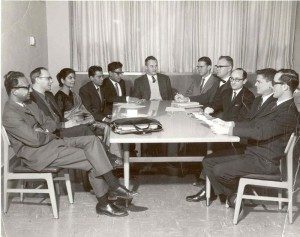
Indian Studies Department – December 1964
Left to right around the table:
MG. Krishnamurthi, Robert Miller, Usha Nilsson, G.C. Narang, Dr. Sharma. Richard Robinson, Henry Hart, Robert Frykenberg, Alex Wayman, Joseph Elder, and Ripley Moore
[1] She taught Sociology in an adjunct capacity at Oberlin and then the University of Wisconsin for several years, and starting in 1965 was the Undergraduate Advisor for the Sociology Department at Madison, advising over 400 students every year. She was also active in many local organizations in Madison, including being elected to the Madison School Board in 1998.
[2] More information on both the Center and the Department are found in Sharon Dickson, History of the Center for South Asia and South Asian Studies at the University of Wisconsin-Madison (https://southasia.wisc.edu/center-history/).
[3] For a history of CYIP, and an analysis of a survey of the impact it had on students, see Joseph W. Elder and Joan A. Raducha, The College Year in India Program, 2021 (https://minds.wisconsin.edu/handle/1793/83039).
[4] Joseph W. Elder, Preface to Civilization of India Syllabus (Madison: Department of Indian Studies, University of Wisconsin, 1965).
[5]https://charge.wisc.edu/SouthAsia/items?cat_id=2.
[6] A fuller history is found in Maureen L.P. Patterson and Joseph W. Elder, A History of the American Institute of Indian Studies, 1961 to 1998, 2010 (http://digital.library.wisc.edu/1793/38774).
[7] Joseph W. Elder, “Caste and World View: The Application of Survey Research Methods,” in Milton Singer and Bernard S. Cohn, eds., Structure and Change in Indian Society (Chicago: Aldine, 1968), p. 175.
[8] In addition to “Caste and World View,” see especially Joseph W. Elder, “Regional Differences in Family and Caste Attitudes: North and South India,” in Robert I. Crane, ed., Regions and Regionalism in South Asian Studies: An Exploratory Study (Durham: Duke University, Program in Comparative Studies on Southern Asia, 1967), pp. 232-57; and Joseph W. Elder, “Cultural and Social Factors in Agricultural Development,” in Development and Change in Traditional Agriculture: Focus on South Asia (East Lansing: Asian Studies Center, Michigan State University, 1968), pp. 46-55.
Joe conducted one more extensive fieldwork project in South Asia. In the spring of 1974, with the support of funds provided by the Behavioral Science Training Branch of the National Institute of Mental Health, Joe, three graduate students from Madison, and three scholars from Tribhuvan University in Kathmandu, studied the effects of the planned resettlement of Nepalis in the Terai in the far south of Nepal adjoining India. The results were published in 1976: Joseph W. Elder, et al., Planned Resettlement in Nepal’s Terai: A Social Analysis of the Khajura/Bardia Punarvas Projects (Kathmandu: Institute of Nepal and Asian Studies, Tribhuvan University; Kathmandu: Centre for Economic Development and Administration. Tribhuvan University; and Madison: Department of Sociology, University of Wisconsin, 1976.)
[9] Joseph W. Elder, Edward C. Dimock, Jr. and Ainslee T. Embree, eds., India’s World and U.S. Scholars, 1947-1997 (New Delhi: Manohar and American Institute for Indian Studies, 1998), pp. 13-14.
[10] “Quakers in the World,” https://www.quakersintheworld.org/quakers-in-action/201/Joseph-Elder. See also an extended 2016 television interview with Joe on the mediation missions, “Adventures of an International Peace Broker”: https://www.pbs.org/video/adventures-of-an-international-peace-broker-nt7ad7/.
[11] Two other sources also provide rich insight into Joe’s life. On March 10, 2014, he gave a noontime talk at Madison in which he summarized some of the high points of his academic career. It is available on YouTube, albeit only as a soundtrack: https://www.youtube.com/watch?v=Q8FE6WizYpQ. Much of this material is also covered in an extensive series of interviews of Joe by Robert Lange in October 2005 as part of the University of Wisconsin Oral History Project: https://minds.wisconsin.edu/handle/1793/62321. I also thank John Elder for sharing materials with me about his father.