
The Joseph W. Elder Prize in the Indian Social Sciences was awarded to Natasha Raheja for The People, in Parts: The Majoritarian Work of the Minority Form
The Edward Cameron Dimock, Jr. Prize in the Indian Humanities was awarded to Fatima Quraishi for Palimpsests Past and Present: the Sufis and Sultans of the Maklī Necropolis, 1380–1660
The Indira Peterson Prize in Sanskrit Studies was awarded to Eric Gurevitch for Everyday Sciences: Practical Knowledge and Knowledgeable Practice in Medieval South Asia
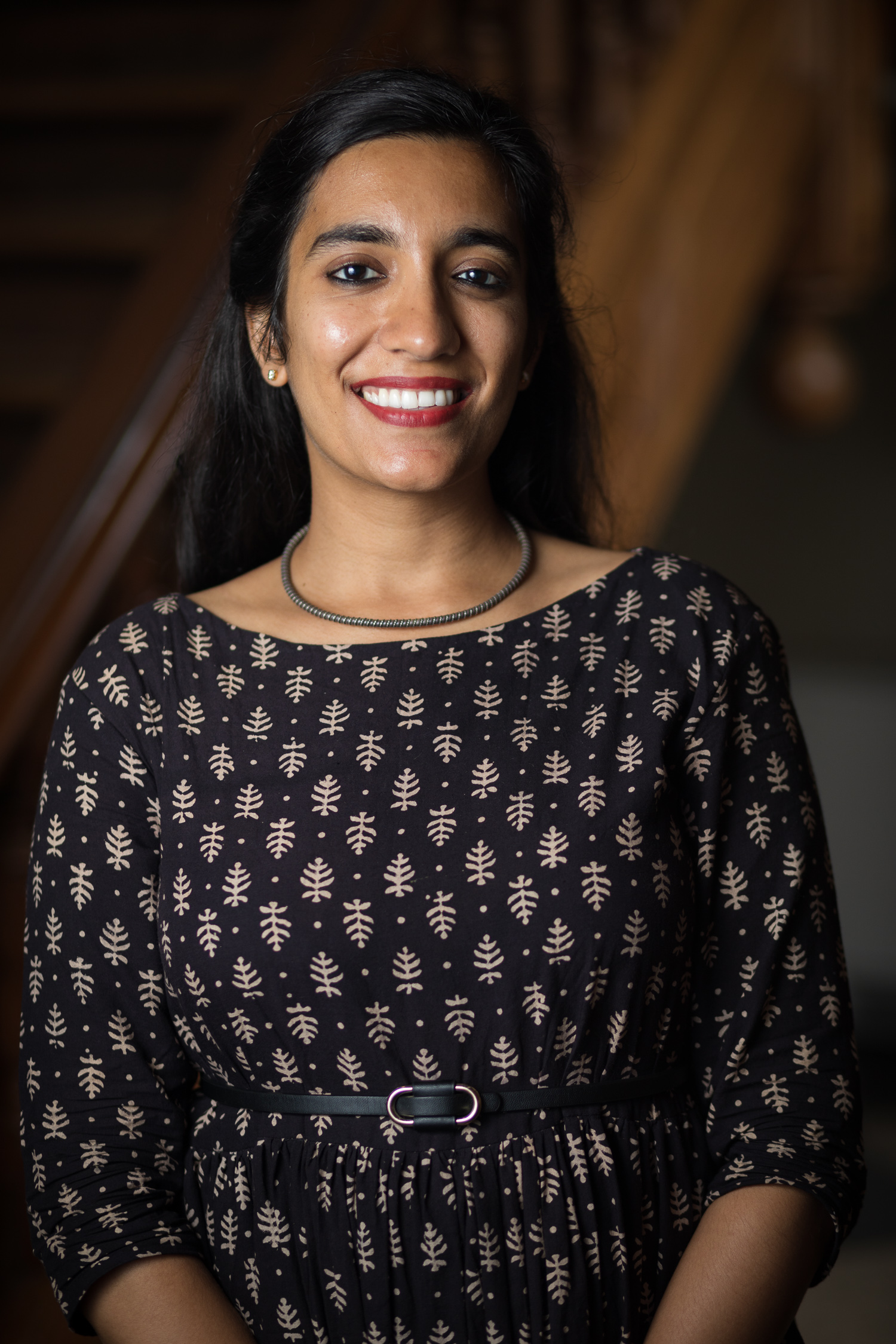
Natasha Raheja
The People, in Parts: The Majoritarian Work of the Minority Form offers a new theory of the minority as a political form and shows how majoritarian projects are built through its appropriation. Around the world, national majorities are telling themselves a potent story: that they are the ones in danger. In the United States and Serbia, Christian and white nationalists warn of “replacement.” In Turkey and Pakistan, Muslim nationalists cast religious “others” as existential threats. In India, Hindu nationalists stoke fears that Hindus are becoming minorities in “their own” land. These movements, and the migration and citizenship policies that accompany them, are not aberrations, but rather expressions of a logic embedded in the modern nation-state—a logic that turns populations into numbers, numbers into votes, and difference into enmity.
In The People, in Parts, anthropologist Natasha S. Raheja homes in on a paradox visible along the India-Pakistan border. When Hindus cross into India from Pakistan seeking refuge, they are admitted as minorities in need of protection. Yet in India, their welcome into the putative majority is selective and conditional. How does majority-minority status shift by crossing a border? Drawing on long-term research in the Thar Desert region, Raheja argues that this bureaucratic confusion is political machinery. Where liberal democracy treats the minority as a shifting, procedural category, nation-state governance fixes it as a substantive identity. The suffering of minoritized populations becomes raw material for majoritarian projects, converted into demographic justification, electoral arithmetic, and nationalist grievance. The minority form, in other words, does majoritarian work.
The People, in Parts offers not only a searing diagnosis of minority-majority politics and the governance of migration but a reframing: the problem is not simply about who belongs and who does not, but how nationalist belonging crosses state borders, pointing to strains within liberal democracy and the nation-state order. The book prize committee felt that The People, in Parts “offers a nuanced analysis of a population caught in the bureaucratic crevices between two nation-states and a provocative account of the meaning of migration and encounters with the state in the aftermath of Partition.”
Natasha Raheja is an Assistant Professor of Anthropology and Performing & Media Arts at Cornell University. She received a PhD in Anthropology from NYU, an MA in Asian Languages and Literature (Urdu), and BS in Biology and BA in Asian Studies from UT Austin. Dr. Raheja is the director of Cast in India, an observational portrait of the Bengali metal workers who manufacture New York City manhole covers, and A Gregarious Species, an experimental, found-footage film featuring cross-border locust swarms in the Thar Desert region. The People, in Parts is her first book.
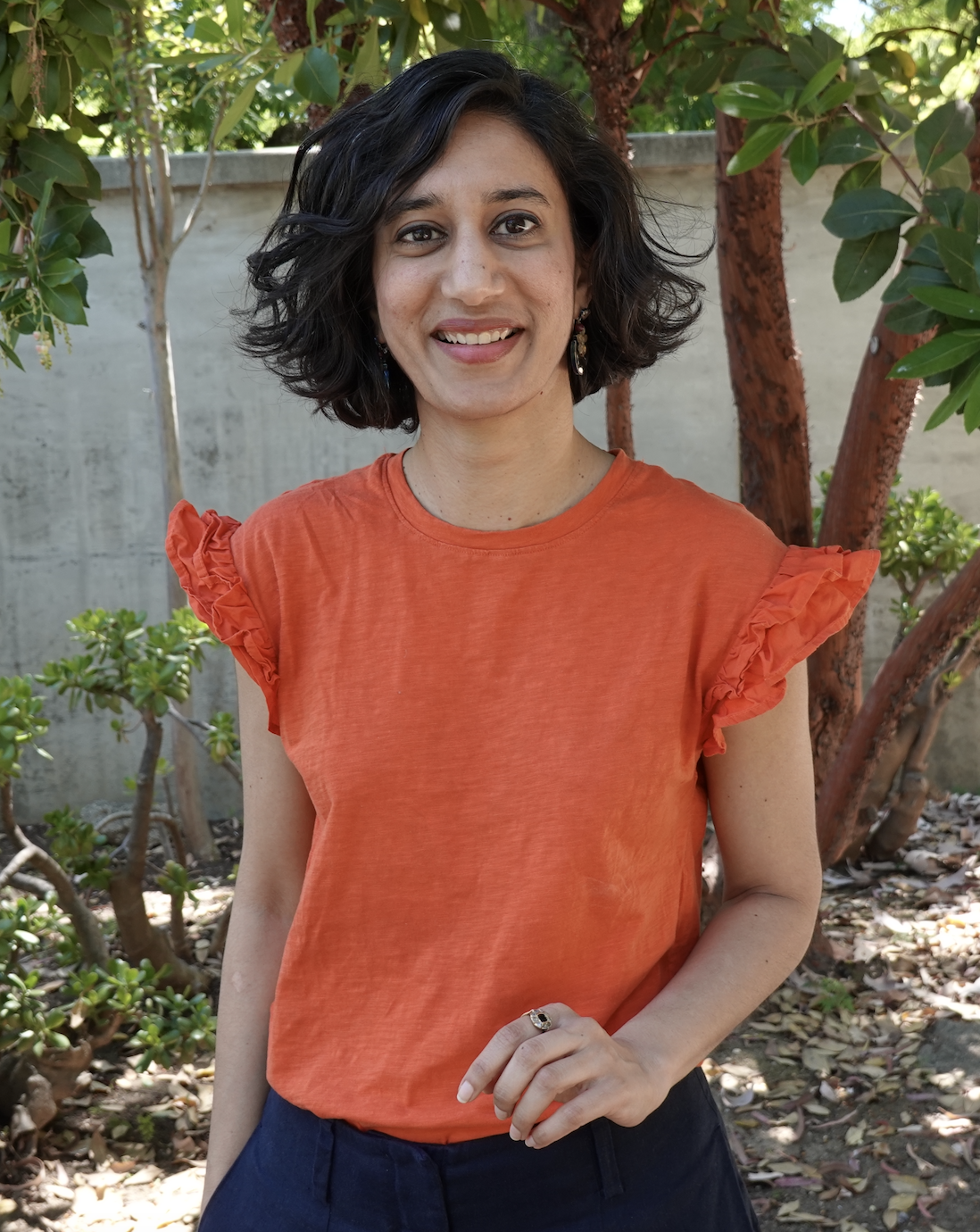
Fatima Quraishi
Palimpsests Past and Present: the Sufis and Sultans of the Maklī Necropolis, 1380–1660 explores how South Asian funerary spaces are dynamic spaces of devotion and sociability, deeply integrated with their surrounding communities and landscapes, by tracing the history of the monumental Maklī necropolis. Established as a modest Sufi site in the late fourteenth century, Maklī grew over three centuries into an expansive site that stretched over four kilometers and consisted of over 70 tombs and mosques, and hundreds, if not thousands, of graves as regional elites and everyday Sufi devotees sought to be buried in the shadow of saints. The necropolis’s architectural affiliations are diverse from the lithic architecture of medieval Gujarat and Rajasthan in India to monumental brick tombs of Timurid Central Asia and Iran, reflecting its proximity to the Arabian Sea, a threshold into the Subcontinent. Untangling the necropolis’ temporal and stylistic layers reveals how Maklī was reshaped by accretional building and the influx of artists and architects who introduced novel artistic practices and technologies to the region. Simultaneously, Makli was also transformed by the emotional investments of visitors engaged in religious rituals and recreational activities. Rather than separating elite patronage from more humble devotions, Palimpsests Past and Present argues that these were mutually constitutive practices, necessary for sustaining historic monuments. Combining a close analysis of Maklī’s built environment with archival materials in collections in Pakistan, India, Europe, and America, Palimpsests Past and Present presents Maklī as an artistic and architectural palimpsest, mutually established by elite patronage and humble devotions. In so doing, it reframes long-standing perceptions of funerary monuments as isolated, static containers of the past, instead highlighting the vibrant lives and afterlives of South Asian funerary spaces.
The book prize committee was impressed by the manuscript’s interdisciplinary depth and breadth of scholarship, innovative and diverse methodology, and deft intertwining of compelling close readings. The committee felt that the Palimpsests Past and Present “merges architectural history, religious studies, and ethnography to make field-defining interventions that challenge assumptions about the meaning of place in a fractured subcontinent.”
Fatima Quraishi is Assistant Professor of South Asian art and architecture in the Department of Art and Archaeology at Princeton University with a particular interest in the visual culture of Muslim communities in the pre-modern period. Her research examines the intersection of transregional artistic styles with locally embedded practices, highlighting early modern mobilities, of people and of objects. An underlying theme in her work is the central role of artists in processes of cultural formation. Building on her interests in monumental landscapes and practices of memorialization, Quraishi’s new project focuses upon the cartographic imagination in Kashmir during the eighteenth and nineteenth centuries and investigates the juxtaposition of artistic practice with geographic knowledge, literary texts, and territorial transformations. Her work has been supported by fellowships at the Society for the Humanities at Cornell University, the Center for Advanced Study in the Visual Arts, and the Metropolitan Museum of Art.

Eric Gurevitch
Everyday Sciences introduces readers to an unexpected cast of intellectuals in medieval South Asia: literate coppersmiths who boasted of their scholarly erudition, physicians who debated philosophical epistemology, and scholar-administrators who composed poetic treatises on mercantile mathematics and weather prediction. Moving beyond cloistered scholasticism, these thinkers pioneered new types of everyday sciences. They embraced regional languages such as Kannada to situate knowledge in particular places, as they negotiated a space between classical textual erudition, professional expertise, and personal experience.
A contribution to the history of science and technology, Everyday Sciences shifts historiographic focus away from a retroactive hunt for discoveries in precolonial South Asia. By exploring how medieval actors resolved disputes over topics such as the physiology of vision, the use of meat in pharmacology, and the management of information in royal elephant stables, Gurevitch unveils the complex textual and social orders that structured the precolonial society.
Written for historians of science, scholars of South Asia, and anyone fascinated by the global history of knowledge, Everyday Sciences challenges colonial hangovers and invites readers to experience the past afresh, proving that practical, everyday activities were engines of profound intellectual innovation. It does so by advocating for a big-enough history of science and technology that can accommodate an array of narratives. The book prize committee lauded Everyday Sciences as a “painstakingly research book that considers the vernacular meaning of science and the impact of scientific writing in Kannada in the medieval period. It provocatively decenters Europe in the history of science and offers a nuanced account of language, practice, and epistemology in the medieval world.”
Everyday Sciences will be published with the University of Chicago Press in March 2027. A South Asian edition will appear from Permanent Black and Ashoka University shortly thereafter, in the Hedgehog and Fox Series.
Eric Moses Gurevitch is an Assistant Professor in the Department of the History of Science at Harvard University. His research explores the histories of science, technology, and medicine in the medieval and early modern periods, with a focus on South Asia and the Indian Ocean. Gurevitch received a PhD from the University of Chicago conferred jointly by the Department of South Asian Languages & Civilizations and the Committee on the Conceptual & Historical Studies of Science.