
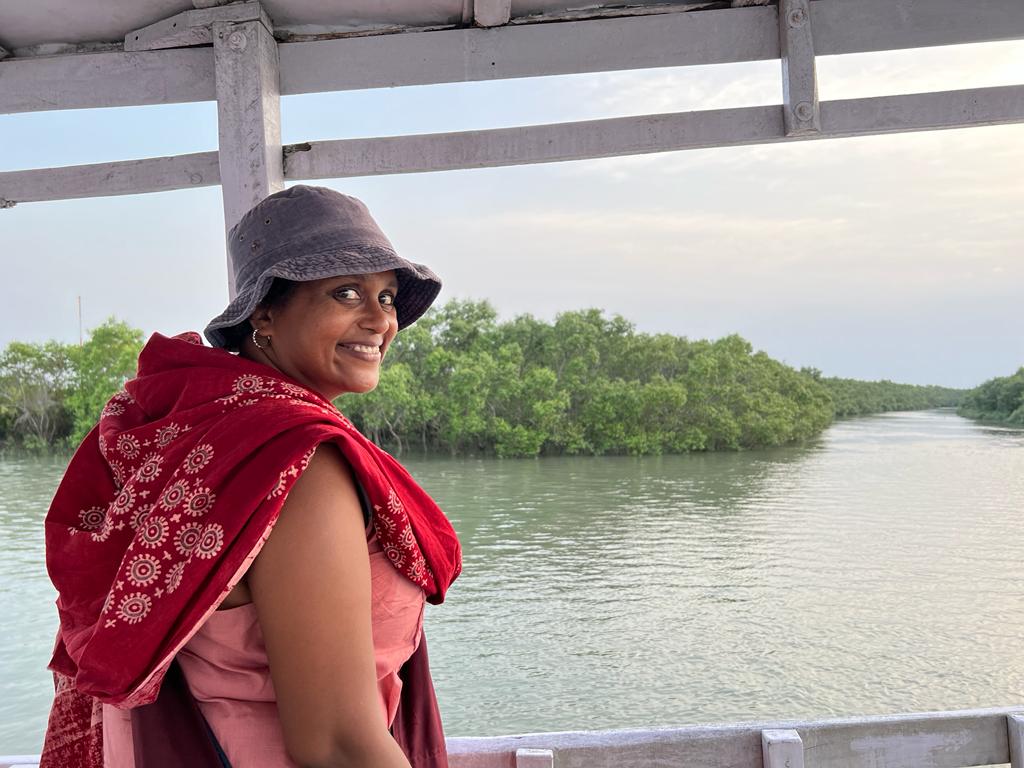
 Shouraseni Sen Roy is a professor in the Geography and Sustainable Development department at University of Miami. Her research interests include climate change processes and impact in the Global South using geospatial analysis techniques.
Professor Sen Roy was recently a senior short-term fellow with AIIS in 2021.
Can you tell us about your research interests and how AIIS was able to support you completing your research project?
My core area of research over the last two decades has concentrated on expanding our understanding of long-term trends in climatic processes, in view of impending climate change. My research has been predominantly focused on India, at various spatial and temporal scales. I have also worked in other regions of the Global South with local collaborators, including Burundi, South Africa, China, and Iran. More recently, I have started concentrating more on the impacts of climate change in the Global South. Given the regional focus of my research, I require continued funding to conduct fieldwork in India. I have been fortunate to get funded by the American Association of Geographers in 2016 and 2017, and a Fulbright Nehru Fellowship in 2019 to do extensive fieldwork in India and publish my findings. I completed my first sole authored book on the impacts of climate change on women and girls in the Global South in 2018. It was during my Fulbright Fellowship in India, when I was invited to give a talk in Kolkata about the greater burden of impacts of climate change on women and girls in the Global South that I was informed about the Indian Sundarban Delta (ISD). I started to pursue research in the ISD on the impacts of climate change in these low-lying islands. After an initial visit to the ISD, I decided to apply for the AIIS senior fellowship, which was a perfect fit for my research.
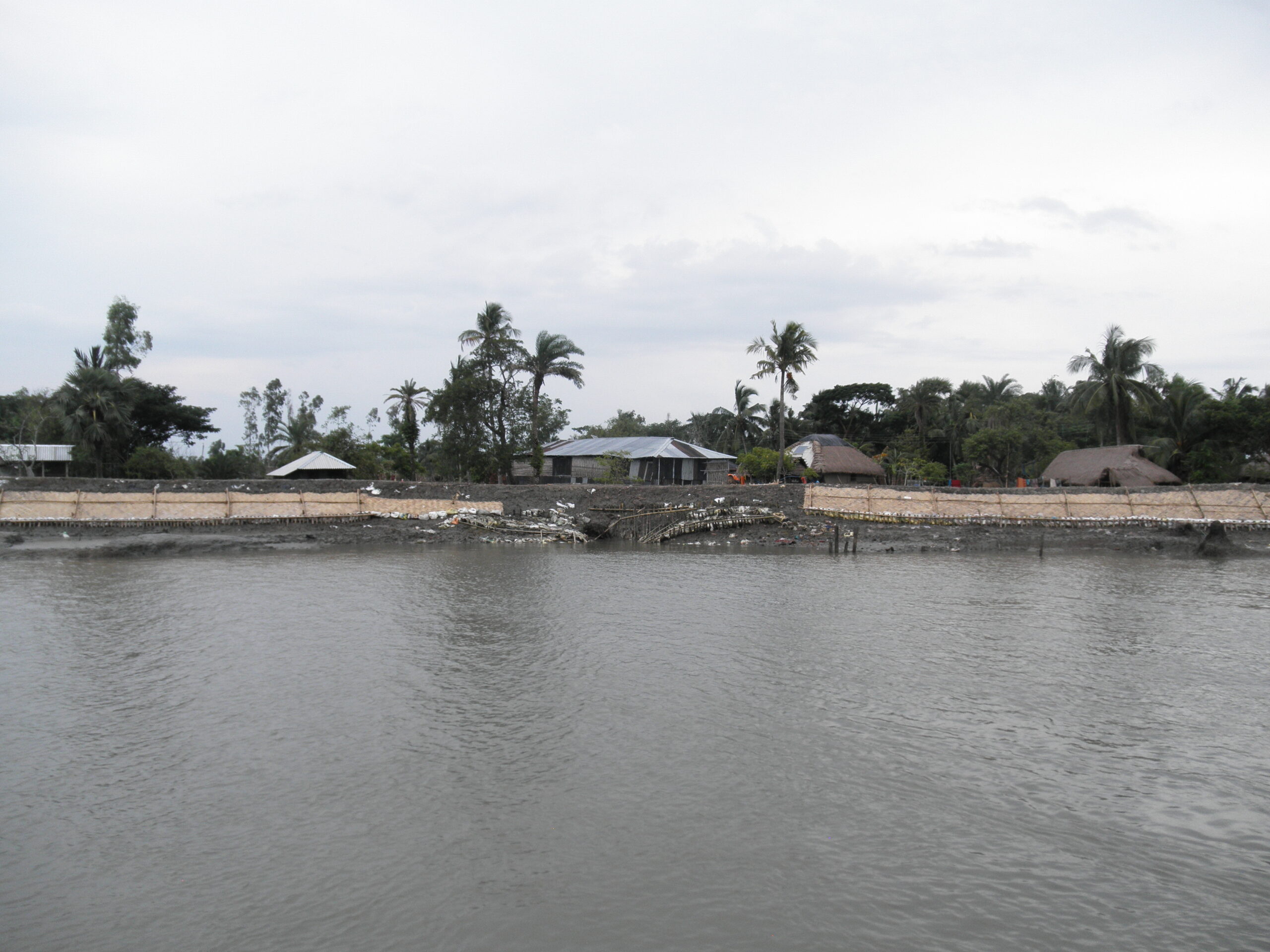 Due to COVID related restrictions, I had to postpone my research plans by six months from December 2021 to May 2022. The extra time gave me more time to prepare for my field trip to India. I was able to communicate with my local collaborator and plan out the details of my trip in May. My local collaborator in India, Prof. Ghosh in Jadavpur University who is a well-known expert on ISD, was extremely helpful in planning out the day to day details regarding my research questions. Once I arrived in the field, I spent extended time in the field interviewing residents and making field observations about the local level impacts of climate change. I was able to listen to the experiences from many residents about living with the constantly occurring impacts of climate change.
I also witnessed firsthand, the destruction caused by Cyclone Yaas in the different islands. I also met with climate refugees, who have been displaced from their homes as a result of rising sea levels submerging their islands, forcing them to migrate to nearby islands. In this regard, the AIIS fellowship was critical for me to get started on this project by doing extended field work. It also gave me the opportunity to connect with some of the well-known experts from Indian Universities. In addition, the staff members in the AIIS office in Delhi were available to help me to open an Indian bank account for foreign nationals, which vastly helped with making payments to different vendors and local expenses during my field trip. Furthermore, there was also another regional AIIS office in Kolkata who were available to provide local assistance in the area.
Your work investigates both the environmental consequences to climate change in the ISD and vulnerable communities in the ISD affected by climate change. Was this always your research focus or did that evolve and change during your fieldwork?
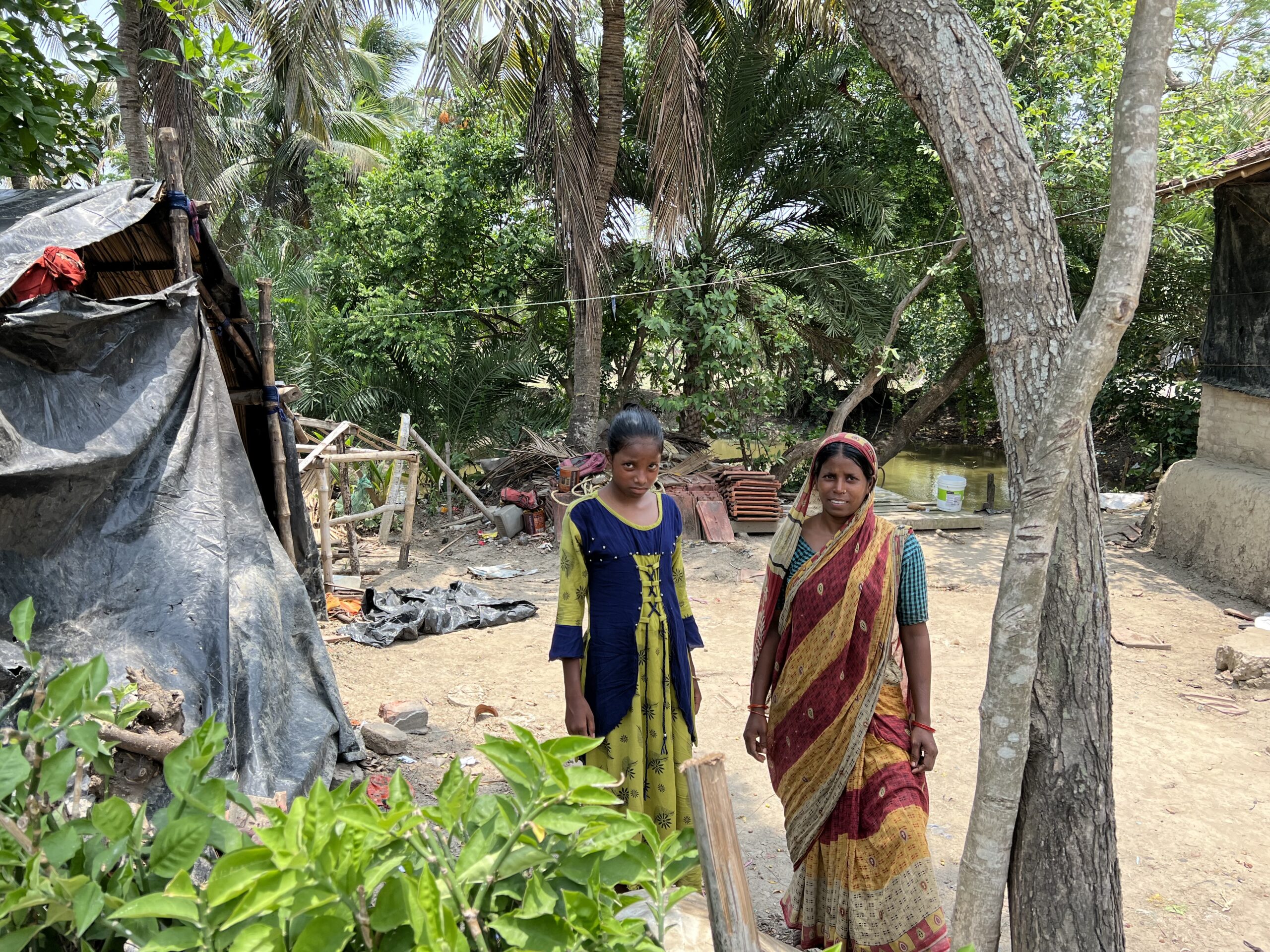 I am a geographer specializing in climatology and geospatial analysis with a focus in the Global South. Most of my research till date has been using secondary datasets at various temporal and social scales. The AIIS fellowship gave me the opportunity to dive into qualitative research through doing field work. My initial plan was to quantify the vulnerability across two different islands in the ISD using survey questionnaire methods. However, once I arrived in the ISD I realized there is a lot more complex interplay of different processes that need to be understood using a more open-ended research lens.
This fellowship gave me the opportunity to truly immerse myself in the socio-environmental fabric of the islands and learn from them directly. Therefore, I conducted open ended conversations with the residents with them directing the trajectory of the conversations. Through these conversations, I learned a lot more than I could have learned reading any academic or mainstream media narratives. While doing my fieldwork, I also decided to focus more on the localized responses and resiliency measures of the communities in the ISD.
Your research seemed to involve many different forms of research methods – mapping, observation, maybe interviews, etc. Can you tell us about how you approached all the research formats and how they all come together in your research project?

My research includes multiple methods, because I want to tell the story of the ISD in a wholesome manner. Therefore, this project involves the use of remote sensing, mapping changes in the morphology of the islands, and the voices of the residents, their stories and experiences in these islands. I have started to make a StoryMap, which is a work in progress that will showcase the different facets of ISD through the lens of impacts of climate change. As you may notice the first two sections document the changes in vegetation and island morphology from the 1970s to present. The next section of the StoryMap will consist of stories and observations from the various islands in the ISD.
Through these images and interviews, I hope to identify the local level vulnerability, through various mitigation and adaptation measures implemented in different islands. In some ways I found the residents of ISD much more informed about the impacts of climate change and sea level rise compared to where I have lived currently for the last seventeen years. Being on the forefront of the impacts of climate change, there is a lot we can learn from them to avoid making mistakes in the future. The link to the StoryMap is: https://storymaps.arcgis.com/stories/5d94bcd4588649d8be988c49e92b508b
Is there anything else you’d like to share with others who are considering applying for AIIS research fellowships?
I highly recommend anyone who is interested in doing research in India to apply for the AIIS fellowship. It is an amazing opportunity to get started or continue your research in India. The presence of local AIIS offices and staff members make it a lot easier to navigate in a foreign country. The AIIS fellowship allows one to go off the beaten path and go beyond your comfort zones, thus discovering a new “you”unknown to you before. This fellowship enables you to truly immerse in your study area and remain focused without any distractions. It also helped me build academic collaborations and friendships that continue beyond the length of the fellowship. I currently have one collaborative manuscript pending final decision in a peer reviewed journal. I also plan to submit another manuscript by the end of the year highlighting the spatial vulnerability of these islands.